

-

Building safety through connection: The power of LGBTQIA+SB group support in Latrobe

14 May 2026

Everyone deserves to feel safe, seen and supported when they reach out for mental health care.

But for many LGBTQIA+SB people – particularly those living in regional and rural areas – care settings can feel unsafe rather than reassuring.

In Latrobe, Victoria, this reality shapes how people seek support, and highlights why affirming, community‑based group spaces like the Rainbow Wellbeing Group at the Latrobe Mental Health and Wellbeing Local are so vital.

The need for community connection

Latrobe City Council sits within Gippsland, a region spanning over 40,000 square kilometres. Distance, limited service access and entrenched stigma can create a deeply isolating experience for LGBTQIA+SB people.

Ky, a Clinical Lead at the Latrobe Mental Health and Wellbeing Local explained how this isolation often shows up when people seek support.

‘Many people who come into the service or attend the events believe they are the only queer person in town.’

Isolation can have a significant impact on mental health, particularly when people struggle to find spaces where they feel understood and affirmed.

‘There are very few queer-specific and services,’ Ky explains.

‘And when support is available, it can be inappropriate.’

Some guests report that their identity becomes the focus of care, rather than their mental health needs.

‘Mental health clinicians, counsellors and doctors will focus on your sexual identity or gender journey, when what you are looking for is mental health or other supports,’ said Ky.

‘There’s often an assumption that if you’re queer, that’s the reason for your mental health struggles – when many, if not the majority, of queer people are completely comfortable with their sexual orientation and gender identity.’
Building safety, together: The Rainbow Wellbeing Group

The Rainbow Wellbeing Group was created in direct response to community need, with LGBTQIA+SB people helping shape a space where they could connect, learn and belong.

‘The guests wanted a queer affirming safe space and we did a lot of work to provide that,’ said Ky.

‘We would brainstorm group guidelines at the beginning of each session to work out what people needed to feel safe, and then staff would ensure that these guidelines were followed.’

Initially, the group explored shared mental health concerns, such as managing anxiety in public spaces. As trust grew, the space evolved in response to what guests wanted from it.

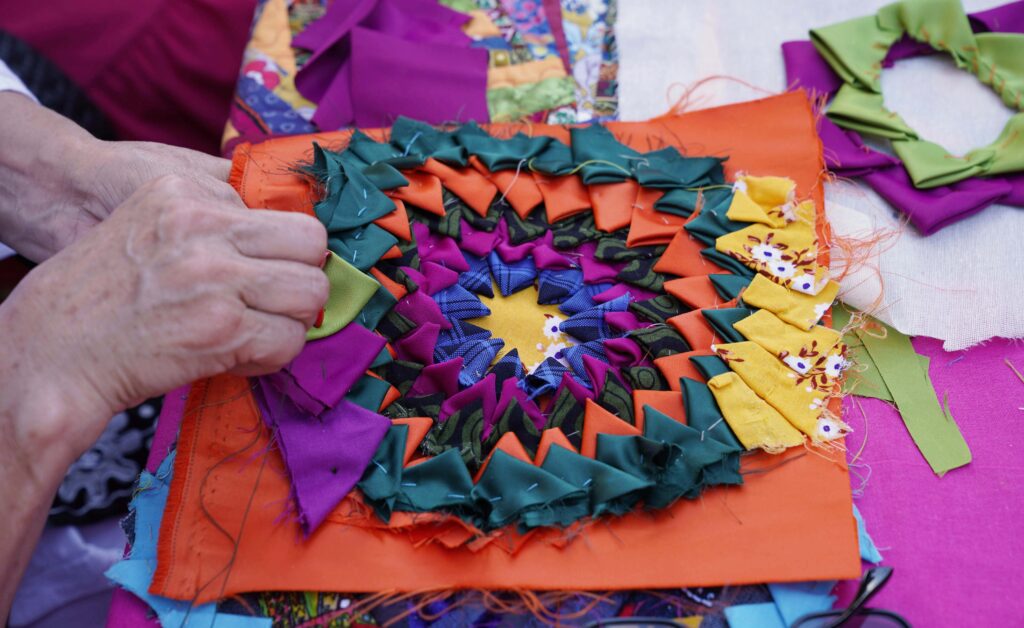
Members began bringing craft projects and spending time together while sharing interests like gardening, cooking and sewing.

Guests organised shared lifts, checked in on one another, and supported each other to attend regularly, reducing isolation and building routine and connection.

What emerged was more than a support group – it became a place of mutual care.

Close up of hands sewing a brightly-coloured pattern.
Above: As guests became more comfortable, they began to bring craft projects to work on to the Rainbow Wellbeing Group.

Sharing experiences, building confidence

The Rainbow Wellbeing Group also became a place where people could speak openly about what it means to live as LGBTQIA+SB in Latrobe. Conversations covered gender identity, transitioning, hormones, and coming out to family and friends.

Guests practised introducing themselves using their preferred names and pronouns, and spoke openly about relationships and sexual health.

As one group member shared, ‘I’ve never talked with someone about sex like this before.’

As confidence grew, some guests developed the skills and self‑assurance to attend other groups or services where they might be the only queer person present.

‘By creating such a safe space, people were able to really reflect on what they needed,’ said Ky.

Members also supported one another by sharing information about which local services felt affirming and which did not – helping people make safer, more informed choices about where to seek support.

‘Through the Rainbow Wellbeing Group, they learn that there are peers and clinicians who are queer or queer‑affirming,’ Ky says.

‘They learn that they don’t need to be fixed. That their experience matters.’

Group support as community care

At its heart, the Rainbow Wellbeing Group shows what’s possible when mental health support is grounded in care, dignity and connection. It demonstrates how group‑based supports can be acts of community care, not just service delivery.

‘It provides a safe space for guests to process what is happening for them, and a place to be with other people on the same journey,’ said Ky.

‘Part of this is knowing that they have the right to take up space in the world, specifically Morwell, when presenting in a non-conforming manner.’

For LGBTQIA+SB people – especially in regional areas – group supports can create belonging where it hasn’t always existed.

On IDAHOBIT, the Rainbow Wellbeing Group reminds us that when people feel safe enough to belong, they don’t just access care – they find connection.

To hear more about the impact of Latrobe Local’s Rainbow Wellbeing Group, catch Ky’s presentation at the Neami National Learning From Experience Forum.